Virupaksha Temple, Hampi

Hampi, Vijayanagara District, Karnataka Shaiva tradition; Vijayanagara imperial capital

Served from the stored corpus. Last scan Sep 29, 2026. Next scan Oct 29, 2026.

Photograph

Earliest republishable photograph in this record.
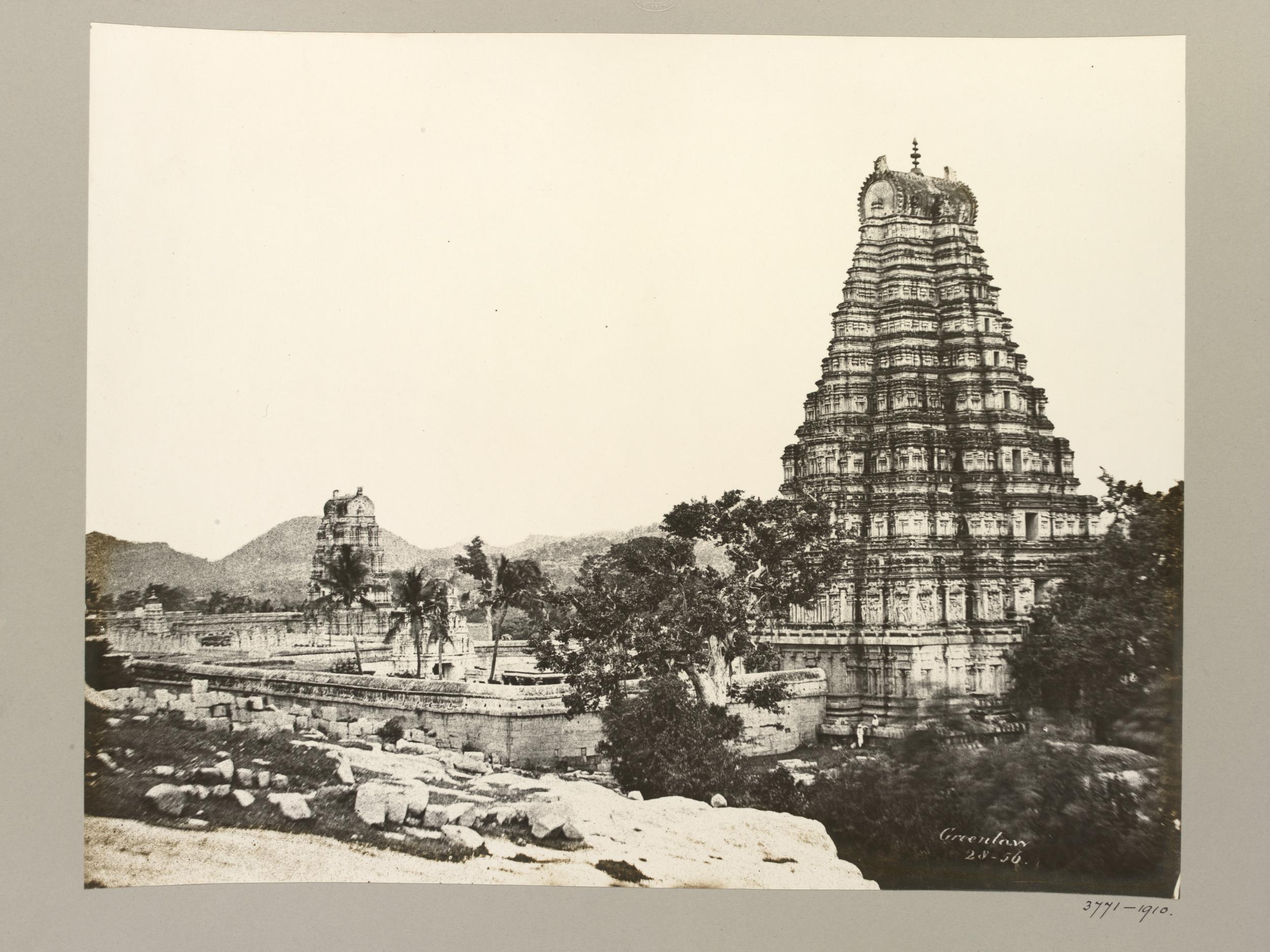
Photograph from 1856 by Alexander John Greenlaw showing the Virupaksha Temple complex at Hampi.

Temple complex, 1856

Oldest named photograph of this temple stored here. Alexander John Greenlaw photographed the Virupaksha complex at Hampi in 1856. His Hampi series is widely treated as the earliest extensive photographic record of Vijayanagara.

1856 Alexander John Greenlaw, 1856. Public domain, via Wikimedia Commons. Source and license

View photograph at full size

What changed?

Each line keeps the confidence of its source. Conflicts are not collapsed.

  • Earliest extensive photographic survey of Hampi Greenlaw’s 1855–56 negatives are the earliest known extensive photographs of Hampi. Later reprinting in 1910 does not change the negative date used here. 1855–1856 photographic campaign · Documented fact · Medium confidence

Evidence summary

Counts are records in this corpus, including gaps.

1 Republishable photographs
0 Interior photographs
0 Diagrams
1 Documents

About the temple

The Virupaksha Temple stands at Hampi on the Tungabhadra, in the former Vijayanagara capital. Secondary accounts dedicate it to Virupaksha, a form of Shiva, and describe continuous worship that outlasted the 1565 sack of the city. Alexander John Greenlaw made the earliest known extensive photographs of Hampi in 1855–1856 on waxed paper negatives; prints from those negatives were made for the Victoria and Albert Museum in 1910. The earliest photograph of this temple stored here is Greenlaw’s 1856 view of the Virupaksha complex. The same campaign also covered Vitthala and other Hampi monuments; those frames are not all ingested here.

Primary deity: Virupaksha (Shiva)

Secondary accounts place major Vijayanagara fabric in the fourteenth to sixteenth centuries, with earlier and later phases. Those dates are not checked against an inscription edition here. The stored photograph is 1856.