Suchindram, Kanyakumari District, Tamil NaduShaiva–Vaishnava tradition
Served from the stored corpus.
Last scan Sep 28, 2026.
Next scan Oct 28, 2026.
“Sthanu, Mal, and Ayan — Shiva, Vishnu, and Brahma — named together in one shrine.”
Editorial summary of the published name. Not an inscription.
Photograph
Earliest republishable photograph in this record.
1 of 5
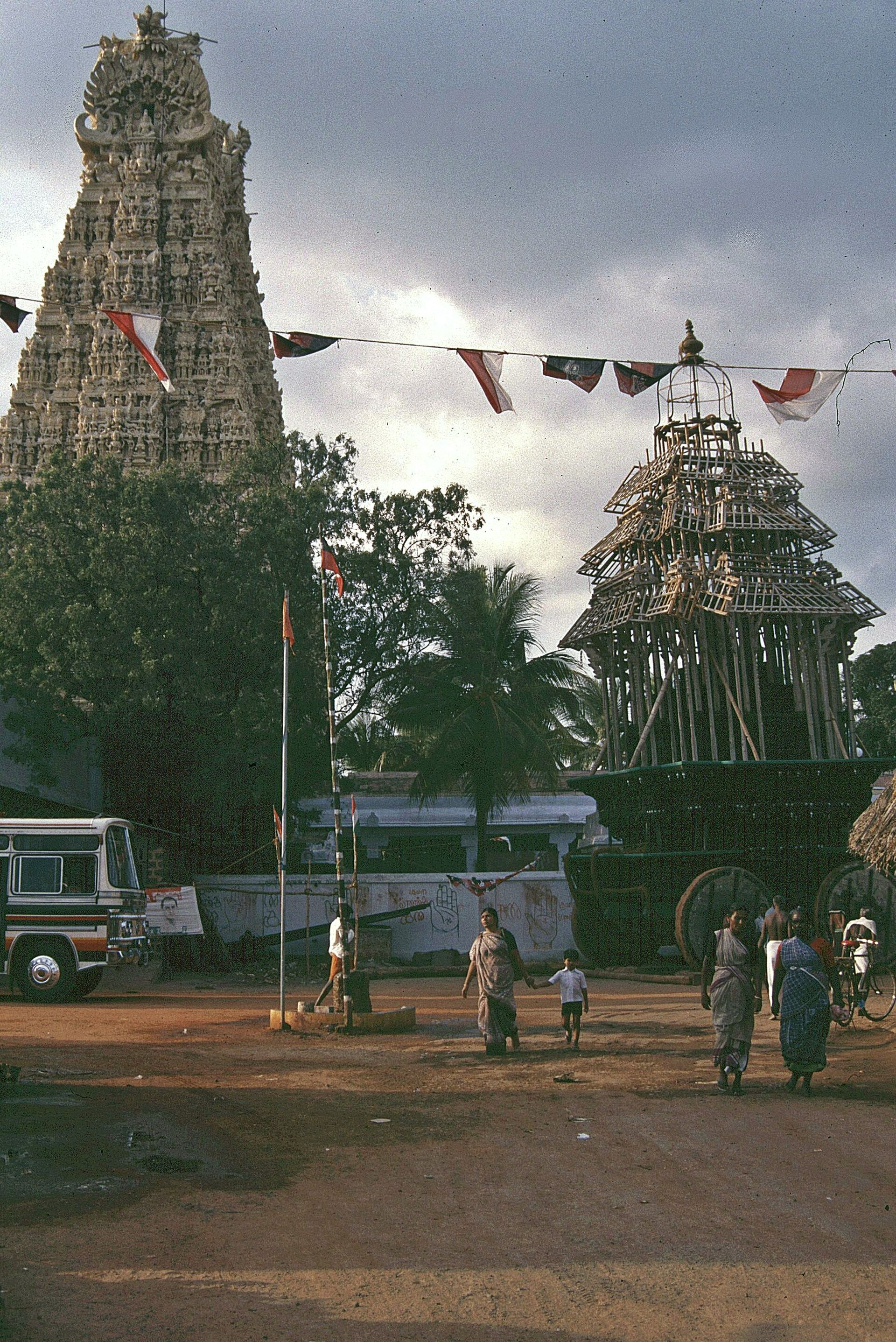
Street, gopuram, and temple car
Earliest photograph in this corpus that can be republished. It shows the eastern gopuram from the street and a tall wooden temple car. It does not show the tank or the interior.
East elevation, read from the photograph and published descriptions.
Verified from photograph
High confidence for what is visible
Verified from measured drawing
High confidence where a survey is stored
Document-supported
Medium confidence
Interpretive reconstruction
Arrangement based on evidence
Known later addition
Dated by a cited source
Unknown or insufficient evidence
Shown so the gap stays visible
Entrance buildings
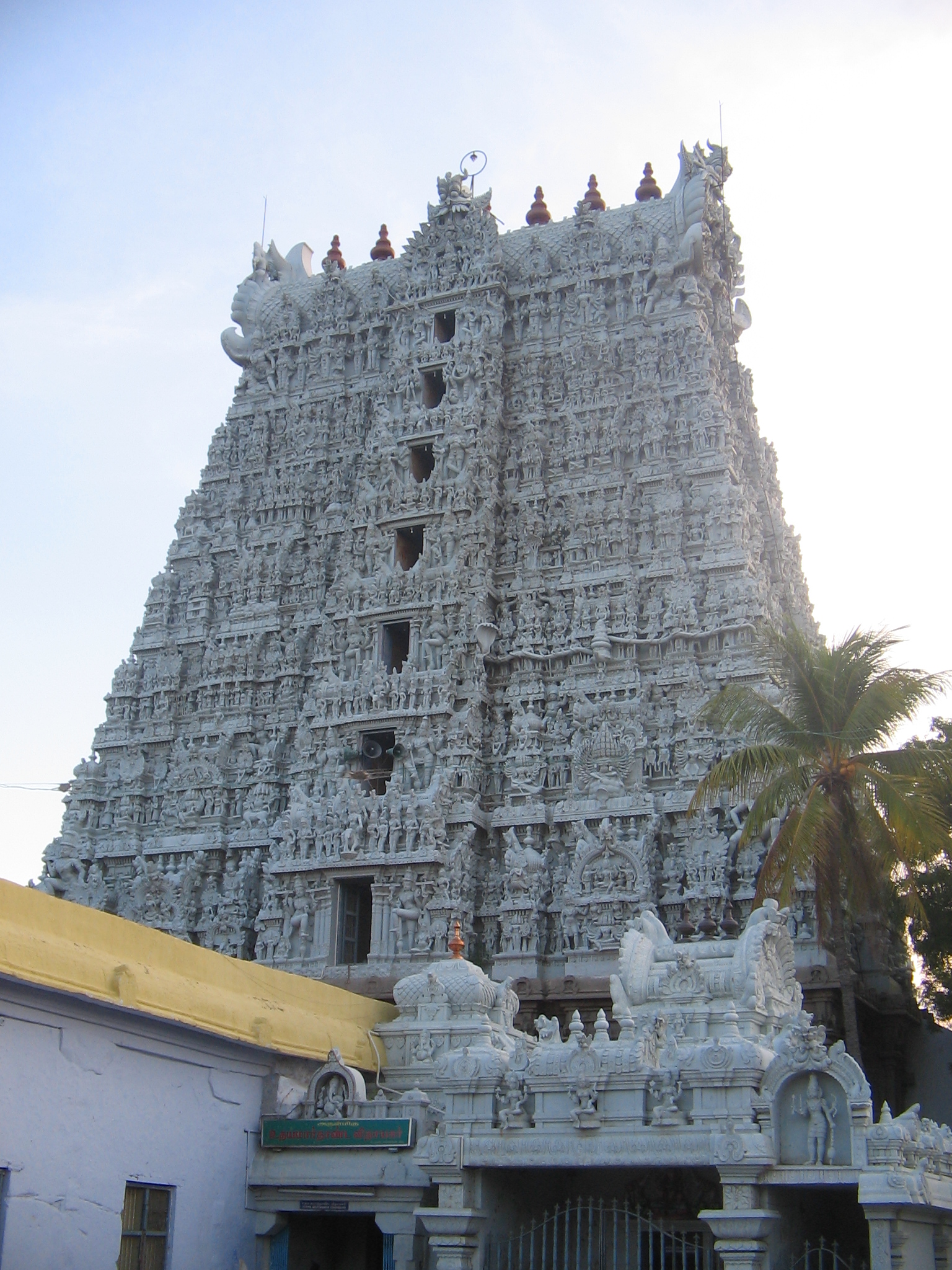
A gateway and lower buildings, including a yellow roof, stand in front of the tower in the 2007 photograph. Their construction date is not established.
Unknown or insufficient evidence · Medium confidence
Lower buildings and a gateway occupy the foreground of the 2007 photograph.
Photographic evidence · High confidence · Thanumalayan Temple, Suchindram
What changed?
Each line keeps the confidence of its source. Conflicts are not collapsed.
Eastern tower: conflicting published descriptions
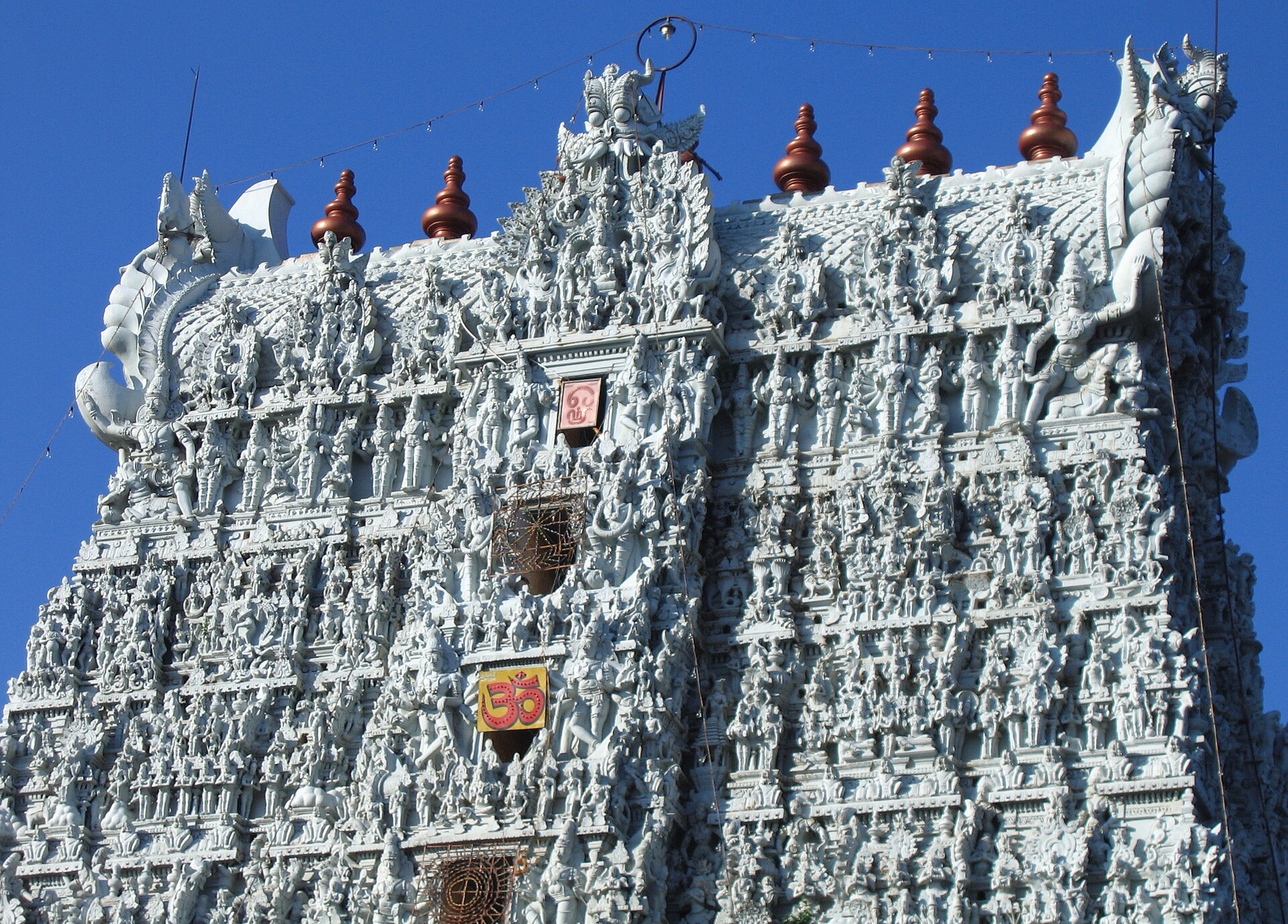
One secondary account describes seven storeys. Another describes eleven storeys and a height of about 44 metres. The 2007 photograph shows the tower without settling the count. No single figure is published here as the measurement.
Published descriptions disagree · Correlated interpretation · Medium confidence
Chola-period masonry is a secondary claim
Wikipedia attributes the present masonry to the Chola period in the 9th century, with later Nayaka and Travancore expansions. Other guides speak of the standing fabric as later. The claim is stored, not confirmed.
9th century in one secondary account · Documented fact · Low confidence
Navaratri mandapa
Wikipedia describes a 16th-century Navaratri mandapa with Kerala-style timber construction. No drawing of it is stored.
16th century in a secondary account · Documented fact · Medium confidence
Hanuman figure reported hidden, then uncovered
Secondary retellings say the image was buried around 1740 and uncovered in 1930. Primary Devaswom records are not ingested, so this remains a published story with a low confidence.
Told as circa 1740–1930 · Documented fact · Low confidence
Tower associated with late Travancore patronage
Secondary historical summaries associate major tower work with the reigns of Vishakam Tirunal and Sree Moolam Tirunal. The primary Travancore records are not in this corpus.
Late 19th to early 20th century, secondary · Documented fact · Low confidence
Entrance buildings visible by 2007
The photograph shows a gateway and lower structures in front of the tower. When they were built is not known. They are not labelled as twentieth-century additions.
Present in 2007; built date unknown · Photographic evidence · Medium confidence
Crowd fittings and tank edging
Barriers, lighting, and concrete tank edges are often mentioned by visitors. This corpus has no work order and no older photograph to date them, so they are not given a decade.
Installation date unknown · Unknown · Not established
Evidence summary
Counts are records in this corpus, including gaps.
5
Republishable photographs
0
Interior photographs
3
Diagrams
4
Documents
About the temple
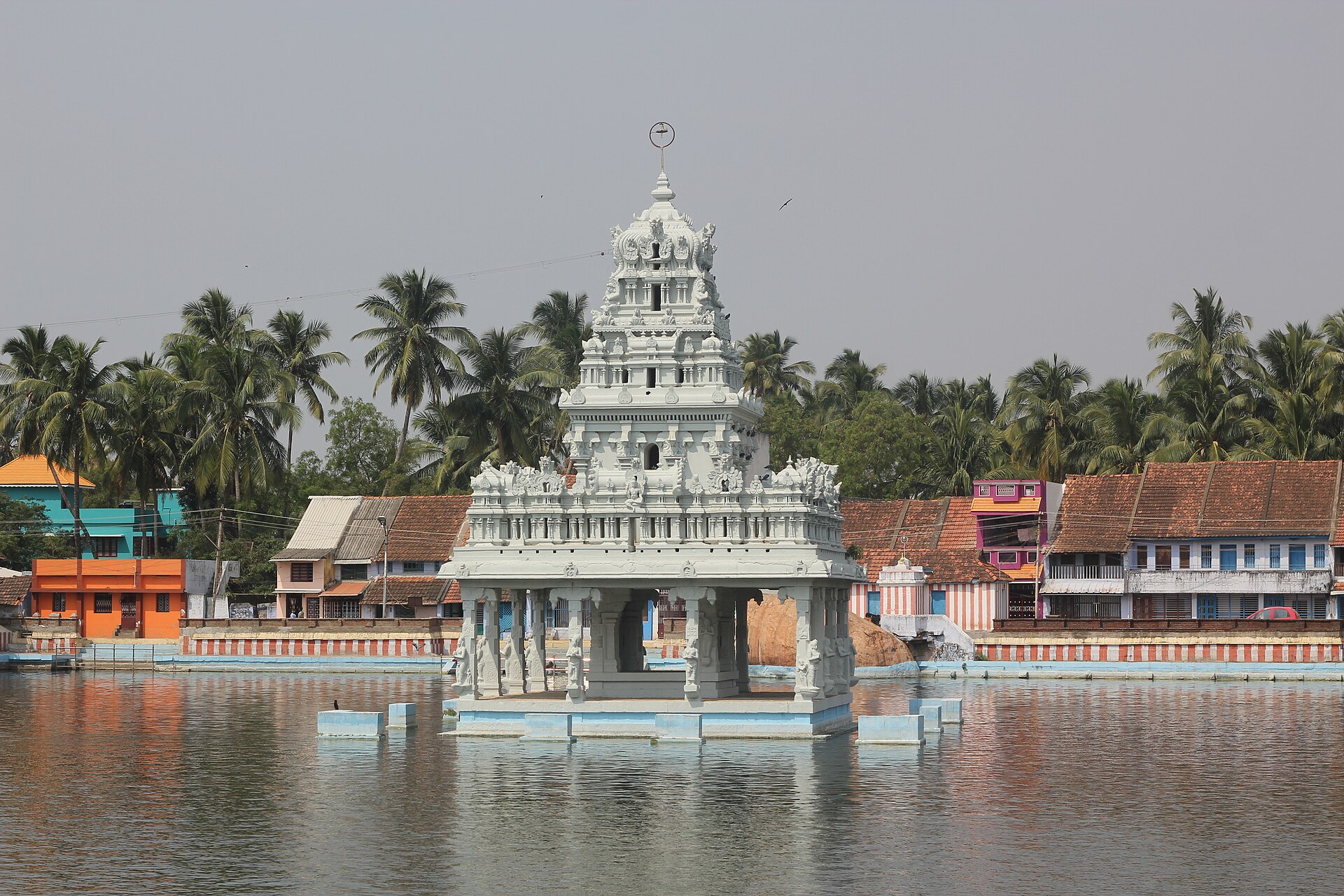
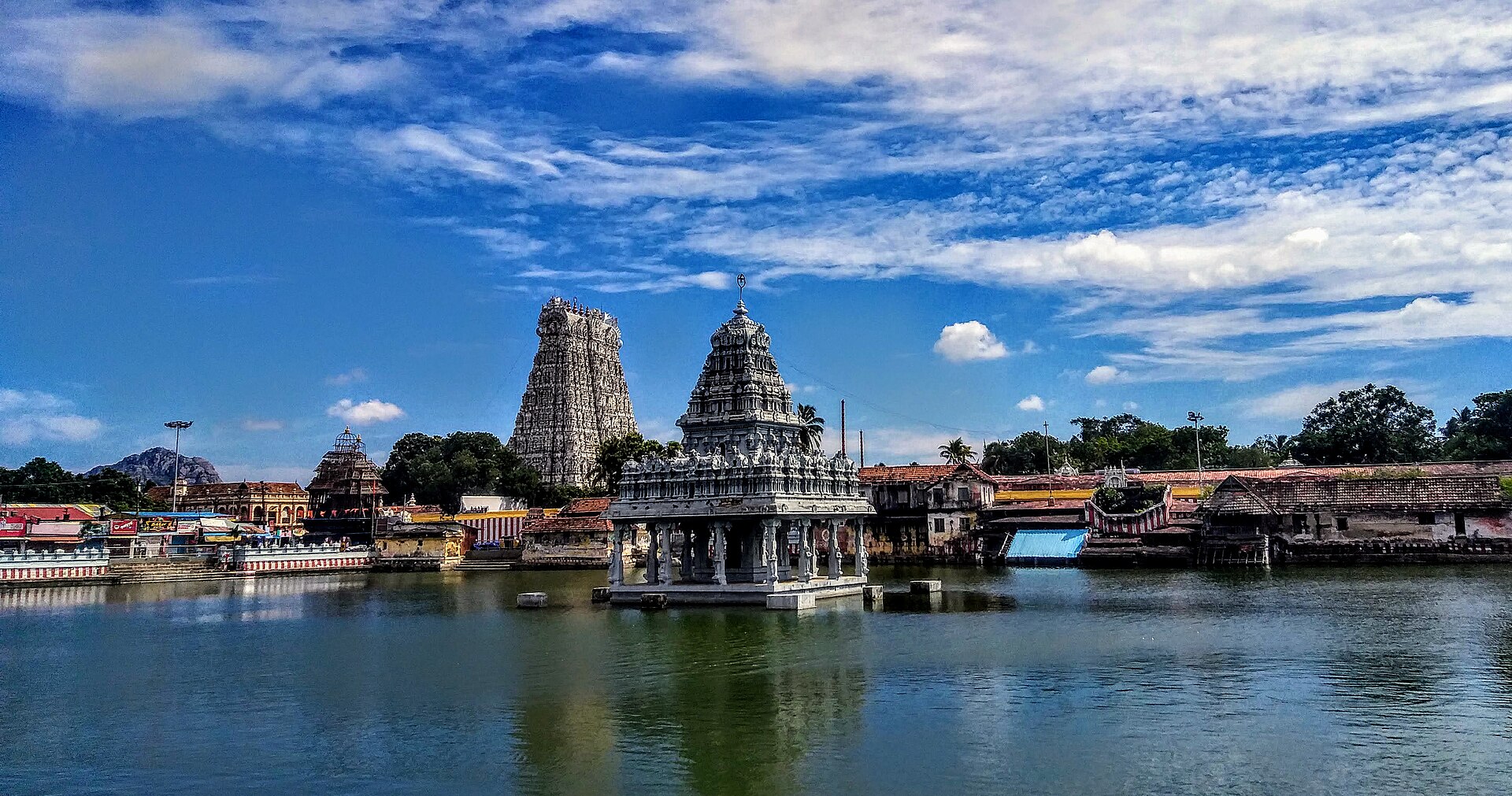
The Suchindram Thanumalayan Temple stands in Suchindram, Kanyakumari district. Published accounts explain the name as Sthanu (Shiva), Mal (Vishnu), and Ayan (Brahma) held together in one presiding form. Temple tradition also connects the site with Indra, and with the sage Atri and Anasuya. Those are legendary explanations, not dated building events. Secondary sources disagree about the tower: some describe seven storeys, others eleven, and the reported height is not the same figure in each account. This record keeps the disagreement. No measured survey has been ingested. The earliest photograph stored here that can be republished is from January 1989. It shows the eastern gopuram from the street, with a wooden temple car. Later frames show the tower close up and the tank with its mandapa. “Oldest photograph in this corpus” does not mean the first photograph ever taken.
Primary deity: Sthanumalayan (Shiva, Vishnu, and Brahma)
Secondary accounts describe medieval worship, Nayaka and Travancore patronage, and a tower completed in the late nineteenth or early twentieth century. The foundation date is not established in this corpus.